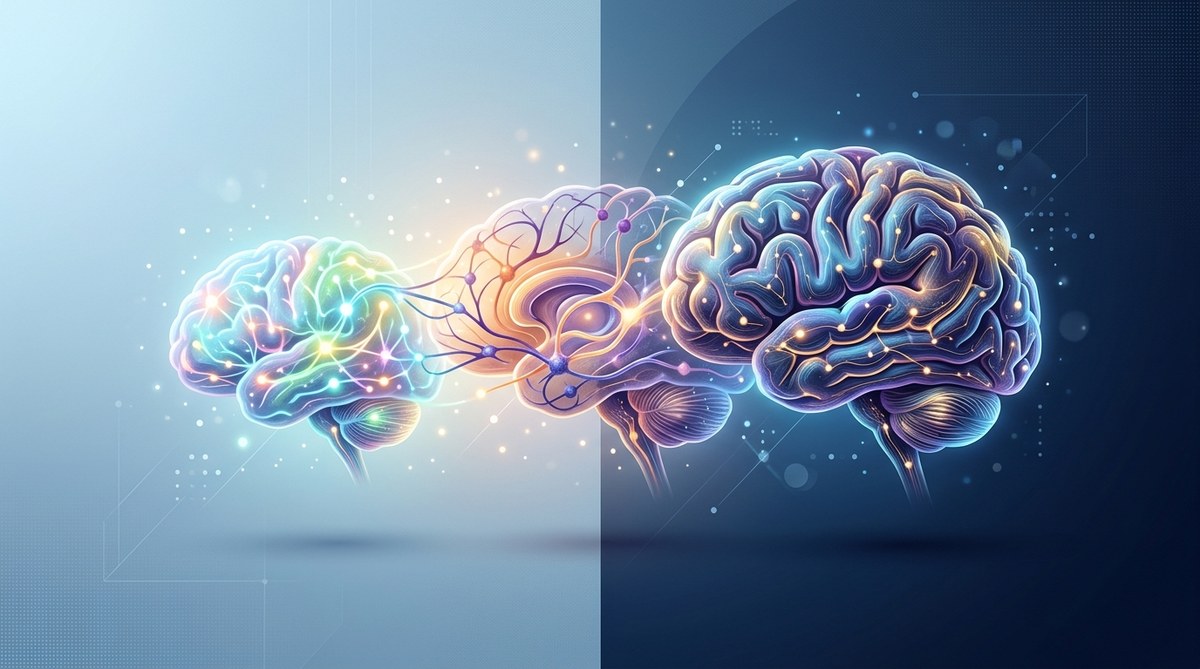
From the moment we are born, the brain begins a remarkable journey that lasts a lifetime. The same organ that helps a baby recognize a caregiver, a child learn to read, a teen navigate social ups and downs, and an adult solve complex problems is constantly reorganizing itself. This ongoing development is not a straight line but a dynamic process shaped by genes, environment, experiences, and even chance. At Neuropsykologi.org we explore these changes with a focus on everyday neuroscience, helping readers understand what moves our minds at every stage of life.
Overview of brain development across life stages
Brain development is a life long adventure with key milestones clustered around early childhood, middle childhood, adolescence, young adulthood, and aging. While the brain grows rapidly in the first years, it continues to refine networks well into adulthood and beyond. Two big themes recur across all stages:
- Plasticity and pruning. The brain creates many synaptic connections early on, then trims the less used ones to strengthen efficiency.
- Myelination and networks. White matter increases as axons become coated with myelin, speeding communication across brain regions. This supports more coordinated thinking, planning, and control of impulses.
In everyday terms, the brain moves from high wiring flexibility to more specialized and efficient circuits. This transition helps explain why young children can learn new languages quickly, why teens take more risks, and why adults often excel at sustained attention and complex problem solving.
1. Early childhood foundations (0 to 5 years)
Early childhood is a period of explosive growth in both structure and function. During the first five years, the brain triples in size and builds the foundational architecture for higher level thinking.
Key milestones and processes
- Sensory integration and motor exploration
- Babies learn through touch, sight, sound, and movement.
-
Neural networks that integrate sensation with action grow rapidly.
-
Language emergence
- The brain lays down language circuits, enabling vocabulary bursts and basic grammar.
-
Early exposure to sounds, words, and conversation strengthens phonological processing.
-
Social and emotional wiring
- Regions involved in recognizing faces, emotions, and social cues become more specialized.
-
Attachment experiences shape stress regulation systems.
-
Executive function seeds
- Simple tasks require more deliberate control of attention, working memory, and self regulation.
- Routines and guided play begin to scaffold these skills.
Practical implications
- Create rich language environments with frequent talking, reading aloud, and responsive conversation.
- Provide safe, predictable routines that reduce stress and support emotional regulation.
- Encourage play that involves problem solving and motor coordination.
2. Middle childhood expansion and refinement (6 to 11 years)
This stage strengthens cognitive tools that support school learning and social reasoning. Networks become more integrated across language, math, spatial thinking, and executive functions.
What grows during this period
- Language and conceptual knowledge
- Vocabulary continues to expand; children begin to apply rules more consistently.
-
Reading and math rely on frontal and parietal networks working together.
-
Working memory and cognitive control
- The ability to hold and manipulate information improves, supporting multi step tasks.
-
Inhibitory control strengthens, helping children resist distractions and follow rules.
-
Social cognition and empathy
- Understanding others’ perspectives becomes more nuanced.
- Peer relationships exert a stronger influence on behavior and identity formation.
Practical tips for families and schools
- Use structured practice that blends memory, attention, and reasoning.
- Break tasks into clear steps and provide feedback that emphasizes strategy and effort.
- Foster collaborative learning and opportunities for peer tutoring.
3. The turn of adolescence: the teen brain (12 to 18 years)
Adolescence is marked by dramatic reorganization of brain networks. The prefrontal cortex matures gradually, while the limbic system can drive strong emotions and rewards seeking. This combination helps explain both heightened creativity and increased risk taking.
Core changes happening in this window
- Prefrontal cortex maturation
- Planning, goal setting, impulse control, and abstract reasoning improve, but not all at once.
-
Connectivity between the prefrontal cortex and emotional centers becomes more efficient.
-
Reward system and sensation seeking
- The brain’s reward pathways are highly sensitive, reinforcing novelty and risk taking.
-
Sleep patterns shift toward later nights, which can clash with early school starts.
-
Hormones and mood
- Puberty hormones influence mood, energy, and stress responses.
- Mental health vulnerabilities often peak during adolescence, highlighting the need for support.
Practical implications for teens and caregivers
- Encourage sleep hygiene and consistent bedtimes even if teens resist.
- Provide autonomy with appropriate boundaries to support decision making and responsibility.
- Normalize conversations about mental health and stress management.
Education and social life
- Engage teens in goal setting and planning to strengthen executive function.
- Use project based learning that connects ideas across subjects and real world problems.
- Support healthy peer networks that foster cooperation and positive risk taking.
4. Emerging adulthood and the last mile to independence (18 to 25 years)
The brain continues to mature well into the mid to late twenties, particularly the prefrontal networks that govern planning, organization, and emotional regulation. This period is about translating adolescence into adult competence.
What to expect structurally and functionally
- Ongoing cortical maturation
- Frontal lobe circuits are still refining, improving complex reasoning and delayed gratification.
-
Emotion regulation becomes more flexible, aiding social relationships and work.
-
Myelination and efficiency
- White matter development supports faster and more reliable communication between brain regions.
-
Processing speed and cognitive fluency typically improve.
-
Risk assessment and decision making
- Improved ability to anticipate consequences but new life challenges test self regulation in novel contexts.
Practical tips for young adults
- Build routines that balance exploration with structure to support long term goals.
- Seek experiences that challenge cognitive flexibility, like learning new skills or languages.
- Prioritize sleep, exercise, and social connections to sustain mental health.
5. Brain health across the lifespan: genetic, environmental, and experiential influences
Brain development is shaped by a mix of biology and life experiences. Genetics set potential trajectories, but environment and experiences can accelerate or hinder development.
Core influences
- Genetics and early biology
- Genetic variants influence when and how networks develop, particularly sensory processing and language circuits.
- Environment and learning
- Rich learning environments, language exposure, nutrition, and consistent caregiving support healthy maturation.
- Stress and resilience
- Chronic stress can alter stress response systems and neural connectivity, especially in regions governing emotion and memory.
- Sleep and daily rhythms
- Sleep quality and duration are critical for memory consolidation and neural maintenance.
Practical takeaways
- Provide stable, nurturing environments during early years to support healthy foundation building.
- Encourage varied, age appropriate learning experiences that challenge the mind without overwhelming it.
- Monitor stress levels and promote coping strategies like mindfulness, physical activity, and social support.
6. Brain plasticity across the life span
Despite the large scale changes across life stages, the brain retains plasticity throughout life. This means it remains capable of adapting with training, experience, and recovery from injury.
Why plasticity matters at different ages
- Early life plasticity is high, enabling rapid learning of language and motor skills.
- Adolescent plasticity supports social learning and identity formation.
- Adult brain plasticity underpins skill acquisition, rehabilitation after injury, and cognitive reserve to delay decline.
How to leverage plasticity
- Engage in deliberate practice for skills you want to acquire, with spaced repetition.
- Challenge the brain with new activities such as learning a musical instrument, new sport, or a different language.
- Stay socially connected; social interaction supports neural health and cognitive function.
7. Brain health essentials: sleep, nutrition, exercise, and stress management
A healthy brain depends on daily habits that sustain its structure and function.
Sleep
- Children and teens need more sleep than adults. Sleep supports memory consolidation and emotional regulation.
- In adolescence, circadian shifts may delay bedtimes; combining light exposure in the morning with consistent bed schedules can help.
Nutrition
- A balanced diet supports brain development and ongoing function.
- Key nutrients include omega-3 fatty acids, protein for neurotransmitter production, iron for cognitive performance, and a range of vitamins.
- Regular meals help stabilize energy and mood.
Exercise
- Aerobic activity boosts blood flow to the brain and supports memory and executive functions.
- Regular movement reduces stress and improves sleep quality.
Stress management
- Acute stress can sharpen focus in the moment but chronic stress is harmful to brain networks.
- Coping strategies include mindfulness, deep breathing, social support, and structured routines.
Practical tips
- Create a consistent sleep schedule tailored to age.
- Prioritize nutrient rich meals and regular family meals to support healthy habits.
- Incorporate regular physical activity into daily life, aiming for at least 150 minutes of moderate activity per week for adults and appropriate amounts for children.
8. When development deviations occur: common issues and red flags
While most brains follow typical trajectories, some children and teens face challenges that require attention.
Common concerns across stages
- Language delays or learning difficulties in early childhood.
- Attention problems and hyperactivity during school years.
- Anxiety, depression, or early signs of mood disorders in adolescence.
- Sudden changes in sleep, appetite, or behavior in any age group.
When to seek help
- Persistent, severe issues in academics or relationships.
- Difficulty with basic self care or mounting distress that interferes with daily life.
- Sudden or escalating concerns about thoughts of harming self or others.
What to expect in assessment
- Neuropsychological evaluation can map cognitive strengths and weaknesses.
- Assessments often include testing of memory, attention, language, executive function, and emotional processing.
- Results guide targeted interventions, educational accommodations, and therapy.
9. Practical guidance for parents, educators, and young adults
Understanding brain development helps tailor age appropriate support.
For parents and caregivers
- Model healthy habits: regular sleep, balanced meals, physical activity.
- Encourage curiosity and exploration while providing structure.
- Talk openly about emotions and coping strategies.
For educators
- Use differentiated instruction to align with changing cognitive abilities.
- Provide explicit instructions and model planning strategies.
- Build classroom routines that foster executive function and self regulation.
For young adults
- Develop a personalized study plan that leverages peak cognitive times.
- Prioritize sleep and stress management as a foundation for learning.
- Seek mental health support when needed and reduce stigma around seeking help.
10. What neuropsychology tells us today
The science of brain development emphasizes a few enduring ideas:
- The brain is remarkably adaptable but follows certain maturational windows.
- Early experiences shape neural connections in ways that echo into adulthood.
- Lifelong learning and healthy habits can bolster cognitive reserve and emotional well being.
- Mental health remains integral to cognitive function; early detection and intervention improve outcomes.
This knowledge informs practical recommendations for families, teachers, and healthcare professionals who want to support resilient, flexible minds.
Quick takeaways by life stage
- Early childhood: language foundation, sensory exploration, attachment safety.
- Middle childhood: school readiness, working memory growth, social skills.
- Adolescence: balance risk and reward, sleep alignment, identity formation.
- Emerging adulthood: independence with continued brain maturation.
- Adulthood: skill optimization, emotional regulation, cognitive maintenance.
- Aging: maintain mental activity, social engagement, and physical health to support brain health.
11. Frequently asked questions
How plastic is the brain in adulthood?
Adult brain plasticity is real but tends to be more targeted and task specific. Regular learning and cognitive engagement can still rewire networks and improve performance.
What is the most important factor for healthy brain development?
A combination of genetics and environment, with sleep, nutrition, physical activity, social connections, and low chronic stress playing major roles.
Do teens need more sleep than adults?
Yes. Teenagers typically need about 8 to 10 hours of sleep per night, and aligning school schedules with biological sleep rhythms can support better attention and mood.
Can we prevent aging related cognitive decline?
A healthy lifestyle that includes regular activity, balanced nutrition, cognitive engagement, social connections, and ongoing treatment of health conditions can reduce risk and preserve function.
What role do schools play in brain development?
Schools provide structured learning experiences that shape cognitive skills, social understanding, and self regulation. Effective education supports mental health and fosters lifelong learning.
Final thoughts
Understanding how the brain develops from childhood to adulthood helps us tailor our actions to support growth at every stage. Whether you are a parent guiding a toddler, a teacher shaping a classroom, or a young adult navigating new responsibilities, the brain offers a roadmap for practical steps you can take every day. At Neuropsykologi.org we remain committed to translating rigorous science into actionable insights for sharper minds and healthier lives.
If you found this overview helpful, explore related articles on memory, language development, and mental health in our Hjärnans Utveckling category. We regularly pull together the latest findings from neuroscience with clear, accessible explanations to keep you informed and empowered.
Further reading and resources
– Neuropsychology fundamentals: brain structure and function explained in accessible terms.
– Articles on sleep and cognition across ages.
– Guides for caregivers and educators on supporting executive function and emotional resilience.
– Updates on research findings that connect everyday experiences with brain changes.
Note to readers: This article integrates current understanding of typical brain development with practical guidance for daily life. Individual development can vary, and if you have concerns about a child or teen, consulting a healthcare professional or neuropsychologist can provide tailored assessment and support.